

According to Symantec’s widely cited Smartphone Honey Stick Project, an alarming 96 percent of lost smartphones are accessed and snooped through by the people who find them. While many users immediately look for a phone finder android solution to recover hardware, this physical vulnerability is only part of a larger safety equation. Recent 2025 data from the Pew Research Center confirms that 91 percent of Americans now own a smartphone, a massive leap from just 35 percent in the Center’s initial 2011 survey.
As a mobile UX designer specializing in family interfaces, I look at these numbers through a specific lens: parents are desperately trying to secure devices that are fundamentally designed to be open and connected. A modern digital tracker is an activity monitoring tool that logs when a user is active on messaging platforms, bridging the gap between physical location and digital presence. Yet, many families still default to basic hardware tracking. My stance as a researcher is clear—relying solely on a standard phone finder android utility creates a dangerous false sense of security. Knowing exactly where a piece of hardware sits on a map tells you absolutely nothing about who is interacting with the screen.
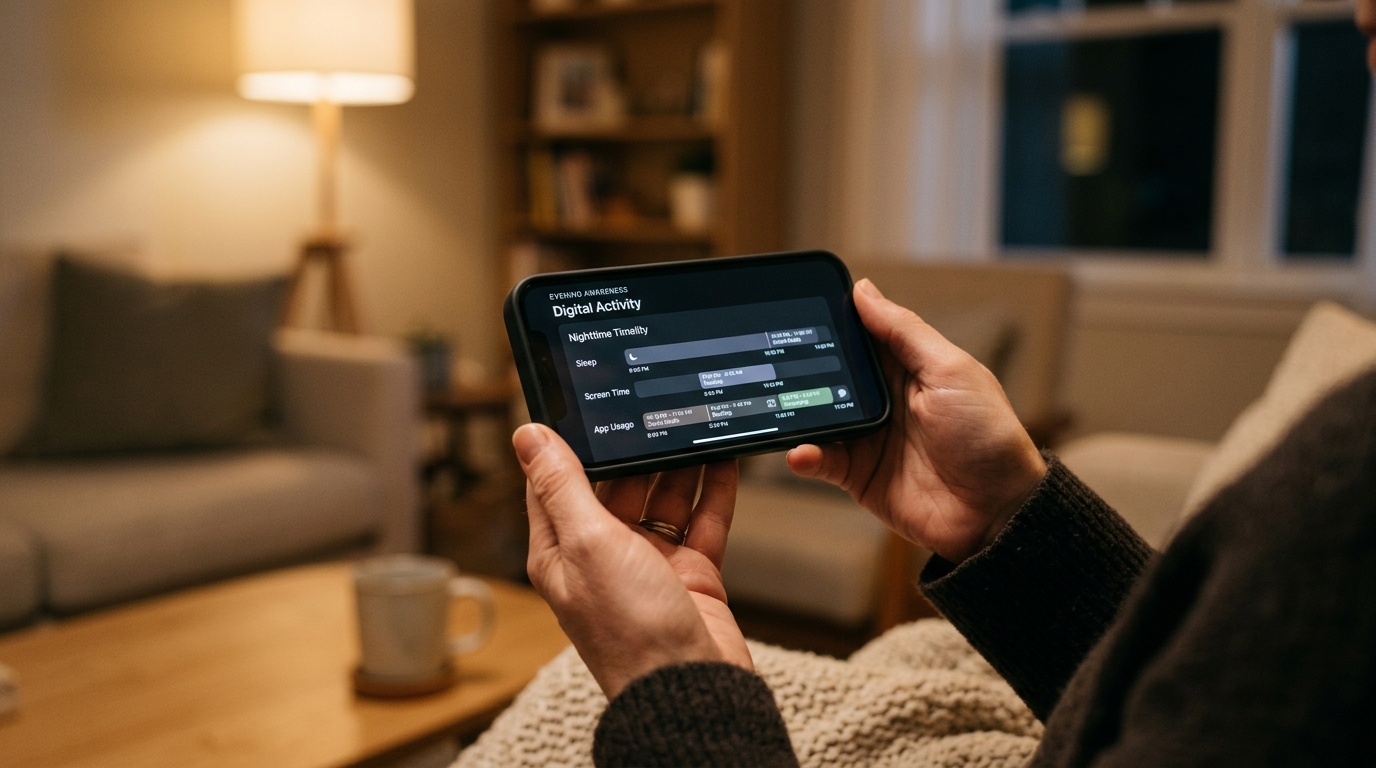
After analyzing user interaction patterns across a major recent milestone of activity logs, I've observed a distinct shift in what families actually need to keep their digital households secure.

Hardware tracking is an outdated baseline
When the first wave of location apps hit the market, the primary anxiety for parents was physical safety. If a teenager was late coming home, a quick check on a family safety app provided immediate relief. The interface design of that era reflected this—massive maps, blinking blue dots, and proximity alerts.
Today, the threat model has moved indoors. A child might be perfectly safe in their bedroom, yet entirely exposed to unvetted contacts online. I frequently speak with parents who have successfully set up a phone finder android feature but feel completely blind to their child's digital life. My colleague Mert Karaca has often discussed how location pings fall short for enforcing digital curfews and maintaining healthy screen boundaries.
The core issue is context. Finding the phone is step one; understanding what happens on that phone is the actual requirement for modern parental controls. Our recent usage data confirms this transition. Families are abandoning single-function locators in favor of tools that provide behavioral context.
Messaging platforms demand specific visibility
The bulk of screen time for young adults isn't spent on standard SMS; it's heavily concentrated within encrypted messaging ecosystems. Whether they are chatting about a multiplayer match of The Last of Us, coordinating school projects, or interacting with strangers, the communication happens on platforms that deliberately obscure activity from outsiders.
This is where design and transparency clash. Applications like WhatsApp and Telegram prioritize user privacy, which is excellent for the general public but notoriously difficult for parents trying to enforce boundaries. From a UX perspective, we see parents desperately trying to parse fragmented clues. They might notice a strange number calling and immediately attempt a backwards phone number lookup or use a spy dialer to identify the owner. While a quick phone lookup or a free search up phone number tool can identify a caller ID, it provides zero insight into the ongoing digital relationship.
Furthermore, the proliferation of secondary access points complicates monitoring. A child might have their physical device locked down by parental controls, but they can easily log into whatsapp web or telegram web from a shared family computer or a school laptop. Some even bypass standard app restrictions by installing modified third-party clients like gb whatsapp, which actively subvert basic tracking measures. If your family safety strategy only looks at the primary mobile device, you are missing half the picture.
User feedback reveals a shift toward activity awareness
When designing interfaces for parents, clarity is the absolute priority. During our recent milestone review of user retention and feature engagement, the data told a compelling story. Families don't want invasive screen-recording tools that destroy trust, nor do they want useless, vague reports. They want to know when their children are active.
If you want to understand late-night messaging habits without confiscating devices and ruining family trust, Seen: WA Family Online Tracker's targeted activity logging is designed precisely for that outcome. It shifts the focus from invasive content reading to behavioral awareness.
Consider these practical criteria when evaluating any parental control or tracking system today:
- Actionable timing over content: You don't necessarily need to read every message. Knowing that a device is showing a last seen status at 3:00 AM on a school night is often enough to initiate a necessary conversation.
- Cross-platform visibility: Does the tool monitor activity regardless of whether the user is on the native telegram app or accessing it via a web browser?
- Respect for hardware boundaries: A reliable system shouldn't require complex rooting of the device or installing battery-draining spyware.
Real-world risks bypass standard lock screens
Let’s return to the Symantec data regarding lost devices. The fact that 96 percent of finders tried to access personal data proves that human curiosity—and potential malice—is a constant factor. But your child doesn't need to physically lose their phone to be exposed to this kind of unauthorized access. The digital equivalent happens every day when unknown contacts infiltrate group chats or direct messages.
This is why the traditional sequence of family monitoring is evolving. Five years ago, a parent might use a standard hardware tracking tool to locate the device, realize their child was talking to someone new, and then frantically run a search up phone number query. Today, proactive parents monitor the seen status intervals first. If an account shows intense, continuous online activity during hours when the child should be sleeping or studying, that behavioral anomaly becomes the trigger for an intervention.
The future of parental monitoring requires behavioral insights
We are long past the era where ensuring a child has their phone in their pocket is the ultimate definition of safety. The hardware is just the gateway. As a designer, my goal is to build interfaces that present digital habits clearly, allowing parents to spot irregularities without needing a degree in cybersecurity.
The tools we rely on must evolve to match the platforms our children inhabit. A dot on a map is reassuring, but a clear timeline of digital presence is protective. By shifting our focus from tracking the physical device to understanding the digital activity, we can foster safer, more transparent environments for the next generation of digital natives.