

The 1:30 AM Illusion
Imagine it is 1:30 AM on a Tuesday. The house is completely quiet. You wake up, grab a glass of water, and wonder if your teenager is asleep. Out of habit, you trigger an android phone finder or check a traditional location app to locate your phone pings. The map predictably shows the device resting right in their bedroom. Case closed, right?
Not exactly. What physical location tools fail to reveal is that they have been actively chatting on a telegram app for the past two hours, long past their agreed-upon digital curfew.
To address this specific blind spot, modern tools like Seen: WA Family Online Tracker have emerged. Seen is an application designed directly for tracking WhatsApp and Telegram 'last seen' and online status patterns, giving parents clear visibility into messaging habits without ever invading the actual message content.
As a software developer specializing in natural language processing and chatbot interactions, I spend my days analyzing how humans communicate through digital interfaces. I have a firm stance on this: tracking a physical device is an outdated approach to modern parenting. We need to measure digital presence, not physical geography.
The New Measurement Architecture for Families
If you look at macro industry trends, you can clearly see why digital boundaries are becoming harder to enforce. I recently reviewed Adjust’s Mobile App Trends 2026 report, which tracks global application behavior. The data is striking. In 2025, global app sessions increased by 7%, and overall consumer spending hit a staggering $167 billion.
More importantly, the report emphasizes that 2026 is the year of "AI and measurement architecture." Tech companies are building highly sophisticated systems to track and optimize how long we stay glued to our screens. If billion-dollar industries are optimizing for maximum screen time, families need their own measurement architectures just to keep up. Interestingly, the same report notes that iOS App Tracking Transparency (ATT) opt-in rates rose to 38% in the first quarter of 2026. This tells me that when users understand why data is being tracked and trust the ecosystem, they are actually willing to opt in to transparent monitoring.
As we noted in a previous discussion regarding digital safety myths, modern family monitoring has fundamentally shifted toward understanding these online activity patterns rather than just plotting dots on a map.
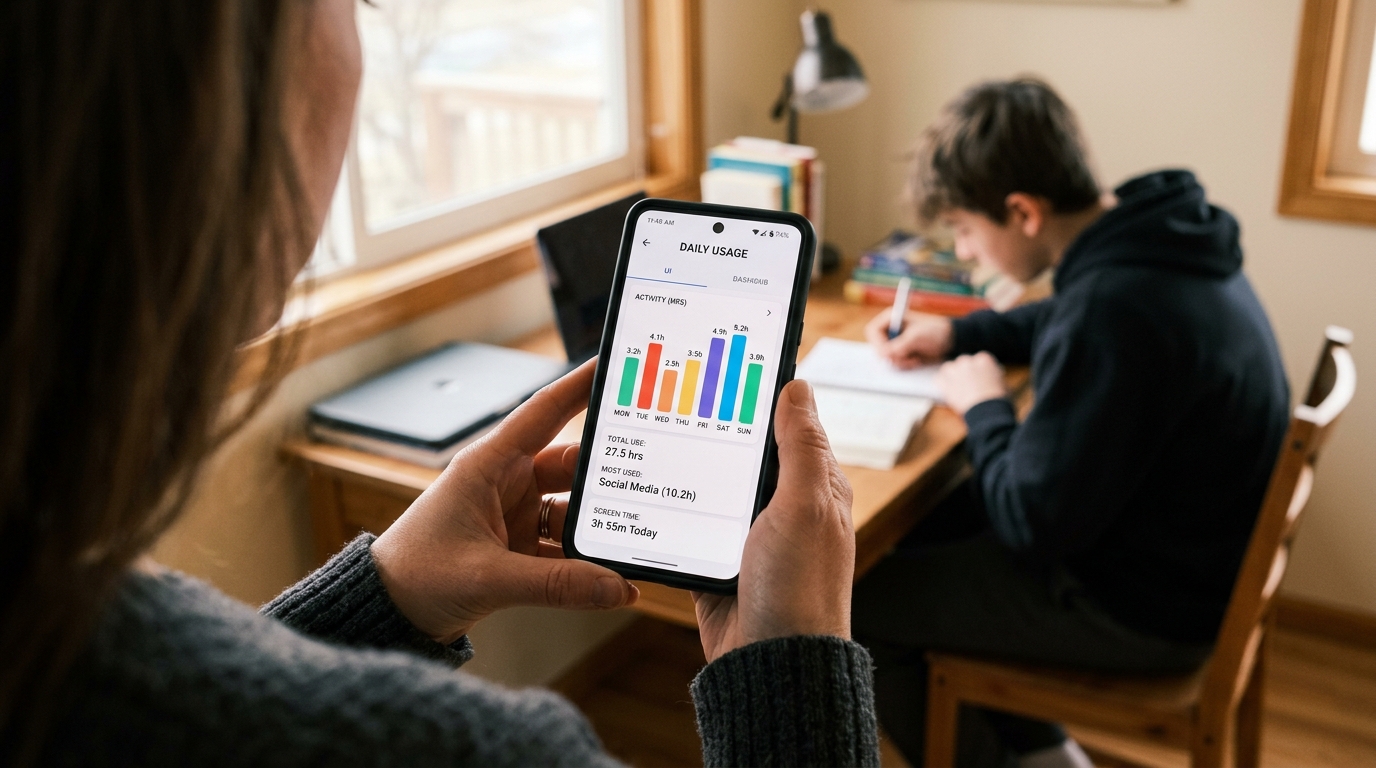
Why Do We Still Rely on the Wrong Tools?
When families first suspect their kids are staying up too late or talking to unknown contacts, they rarely know exactly what tools to use. They often start by treating digital problems like analog ones.
For instance, a parent might see a strange notification pop up on a modified messaging client like gb whatsapp. Panic sets in. Their immediate reaction is to run a search up phone number query or try a free telephone look up site. I’ve seen parents waste hours on clunky people lookup free directories or even try a sketchy spy dialer to figure out who is texting their child at midnight.
These phone lookup habits are understandable. A quick backwards phone number lookup might give you a name, but it completely misses the broader context. It tells you the "who" but ignores the "how often" and "when." Is this a one-off spam message, or are they talking to this person for three hours every night on whatsapp web?
Practical First-Use Scenarios for Activity Tracking
This is exactly where metadata tracking becomes highly practical. Seen: WA Family Online Tracker focuses purely on the timestamps of digital presence. Here is how real families actually use it:
1. The Homework Hour Verification
You enforce a strict "no chatting during homework" rule. Google FamilyLink and basic parental controls might block specific apps, but kids are incredibly resourceful. They might bypass restrictions by logging into telegram web on a shared family laptop. By monitoring online presence, you can see if their focus is genuinely on their assignments or if they are actively jumping in and out of chat windows.
2. The Digital Curfew Enforcement
Sleep deprivation is a massive issue for teenagers. You might assume they are up late watching a streamer play a Last of Us walkthrough on a console, but often they are caught in endless group chats. By looking at their last seen logs the next morning, you can have an evidence-based conversation. Instead of saying, "I know you were on your phone," you can say, "I noticed you were online until 2 AM last night. Let's talk about moving the charger to the kitchen."
Who Benefits Most from This Approach?
I always emphasize transparency when building or recommending software. A tool is only as good as the intention behind it.
- Who this is for: Parents of teenagers trying to establish healthy, mutual boundaries around late-night screen time. It is for guardians who want actionable data to guide conversations, not accusations.
- Who this is NOT for: This is absolutely not for tracking a spouse or micromanaging an adult partner. If you are looking for covert surveillance tools, this methodology will not serve you. Healthy metadata tracking relies on open family dialogue.

How to Choose the Right Tool for Your Family
If you are exploring the broader ecosystem of family safety apps, you need a framework for deciding what actually warrants monitoring. My colleague Tolga Öztürk recently explored this transition perfectly in his recent analysis of our latest usage milestones, highlighting the limits of physical tracking.
When selecting a solution, I recommend evaluating three specific criteria:
- Context over Content: Does the app read private messages? If yes, skip it. Reading message content shatters trust entirely. You only need to know when someone is active, not what they are saying.
- Cross-Platform Visibility: Teenagers rarely stick to just one app. They will bounce from whatsapp to telegram depending on which friend group is active. A good activity tracker handles multiple networks across various platforms without friction.
- Historical Patterns: A single late night isn't a problem; a two-week trend of 3 AM chat sessions is. Look for tools that provide historical charts so you can identify chronic sleep disruptions.
Moving Toward Digital Awareness
We need to stop pretending that knowing the geographic location of a piece of hardware is the same as knowing our kids are safe. In practice, a teenager sitting quietly in their bedroom with unmonitored, unlimited access to global messaging platforms is at far greater risk of sleep disruption and boundary-breaking than a teenager out at a local movie theater.
If you want to move past the anxiety of unknown numbers and outdated location pings, Seen: WA Family Online Tracker's activity logging provides the exact measurement architecture families need today. Start with clear communication, explain why sleep boundaries matter, and use activity patterns to keep those boundaries intact.