
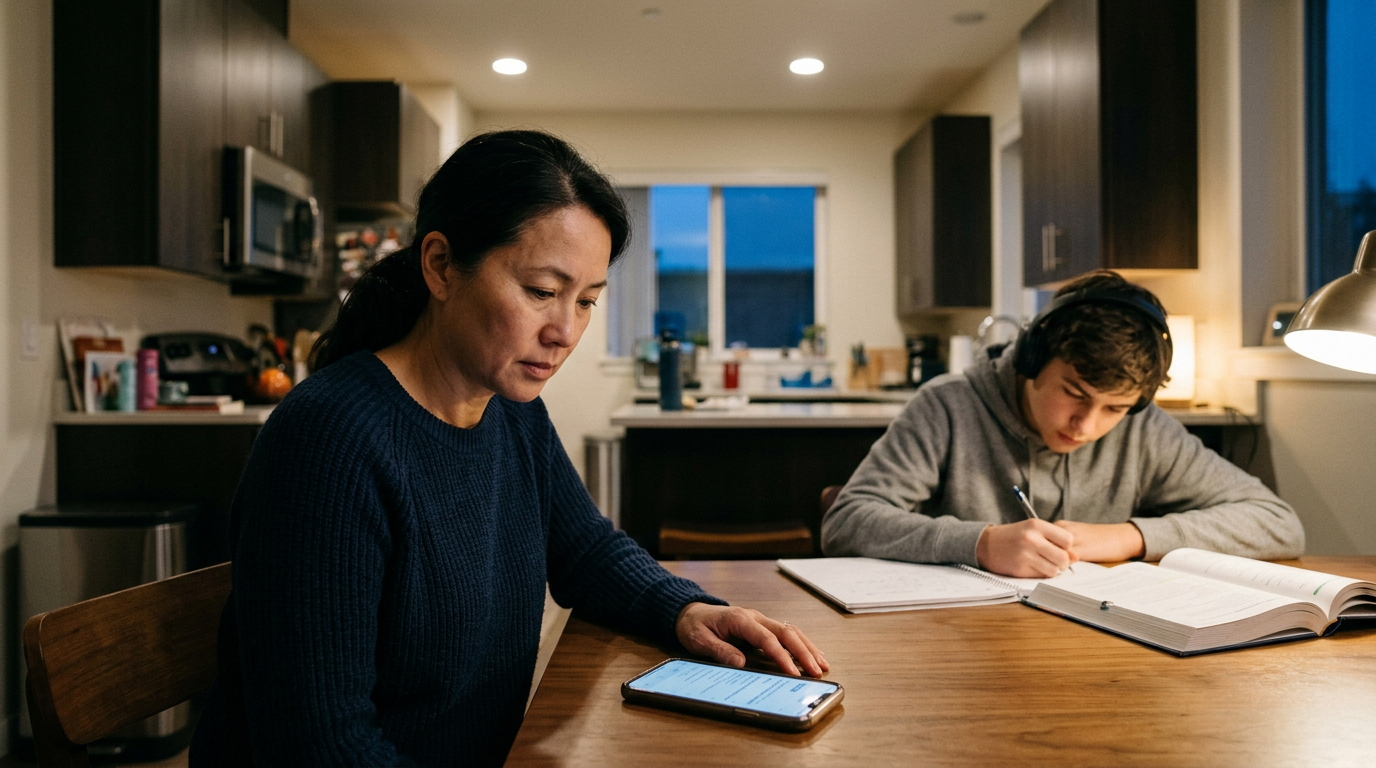
A phone number search is most useful when it gives parents context, not just a name. That is why an improved lookup layer inside a parental control workflow matters: instead of treating a number as an isolated mystery, families can connect contact checks with online activity patterns, timing, and broader safety decisions.
Seen: WA Family Online Tracker is an iOS and Android app for families who want direct visibility into WhatsApp and Telegram last seen, seen history, and online activity windows. Its value is not in replacing every family safety app or android phone finder tool, but in helping parents notice behavior patterns that a basic phone number search alone cannot explain.
What changed, and why it matters
The practical improvement is simple: families increasingly need phone number search as a first filter, then a second layer that shows whether a contact actually lines up with unusual messaging times, repeated last seen changes, or unexplained online bursts in whatsapp and telegram. A one-off result from a phone lookup tool can answer who may be calling. It usually cannot answer why a child is suddenly active late at night, why a number keeps appearing around school hours, or whether a pattern is new or ongoing.
That gap is where integrated parental controls become more useful. If a parent starts with a phone number search, they are often trying to reduce uncertainty fast. But parenting decisions rarely stop at identification. They move into questions of timing, frequency, and behavior.

In practice, this means the better feature is not merely “search up phone number.” It is the combination of number awareness with direct tracking of last seen behavior for messaging platforms families actually use. For households where whatsapp web, telegram web, or the mobile telegram app are part of everyday communication, that context can be the difference between overreacting and understanding what is really happening.
Why parents outgrow standalone lookup tools
Standalone number services still have a place. According to ReversePhone.com, reverse lookup platforms search through billions of records to identify callers and surface public information tied to a number. That is useful when a parent sees an unfamiliar caller and wants a quick first pass.
Likewise, Review42’s roundup of deep web phone number search tools noted that some services, such as TruthFinder, emphasize detailed reports, mobile apps for iOS and Android, and up-to-date data in readable formats. You can see that in Review42’s February 13, 2024 overview here: Best Deep Web Phone Number Search in 2026.
But those services solve a narrower problem. They help with identification. They do not function as parental controls app systems built around daily family habits, recurring contact checks, and messaging visibility. Parents are usually not running background checks. They are asking practical questions:
- Is this number connected to a sudden shift in my child’s messaging routine?
- Is late-night activity occasional or repeated?
- Do I need a conversation, a rule change, or no action at all?
A family safety app should help answer those questions with less guesswork.
Three real-life use cases where an integrated approach helps
1. The unknown number that keeps reappearing
A parent notices an unfamiliar contact appearing in a teen’s messaging routine. A basic phone number search may reveal whether it is a business, a known individual, or a likely spam source. Useful, yes. But if the number keeps coinciding with abrupt whatsapp seen changes late in the evening, the issue is no longer just identity. It becomes a pattern question.
With Seen: WA Family Online Tracker, the parent can compare messaging activity windows over time instead of making a decision from one screenshot or one missed call. That creates a calmer, more informed next step.
2. Device location is fine, but communication behavior is not
Many parents already use an android phone finder for location reassurance. That helps answer where a device is. It does not explain who may be influencing behavior through messaging apps.
This is where families often discover the limit of location-only tools. A child may be at home, school, or practice exactly where expected, while their late-night telegram or whatsapp activity suggests something else needs attention. An android phone finder and a parental monitoring app solve different problems. One is about place. The other is about communication patterns.
If you want to understand that distinction before choosing a tool, Seen: WA Family Online Tracker is designed around message-timing awareness rather than just location checks.

3. Parents need signals, not surveillance theater
Some families do not want a heavy, all-device lockdown system. They want lighter parental control options that focus on noticeable changes: repeated late online sessions, school-hour spikes, or contact patterns that deserve a conversation.
That makes this kind of feature especially useful for parents of preteens and teens who are not looking for maximum restriction, but for better visibility. Good parental controls should reduce noise. If every tool produces alerts without context, families stop trusting the alerts.
Who benefits most from this feature?
This improved workflow is a good fit for:
- Parents of preteens and teens who communicate mainly through whatsapp or telegram
- Families who already do occasional phone number search checks and want more context afterward
- Users who need a family safety app that complements, rather than duplicates, an android phone finder
- Households that prefer pattern-based monitoring over invasive device control
Who is this not for? If you need full device blocking, app time limits across every category, or enterprise-grade content filtering, a broader parental controls app may be a better fit. Seen: WA Family Online Tracker is more specific. It focuses directly on whatsapp and telegram last seen tracking, online behavior windows, and activity analysis.
How to judge whether a parental control app is actually useful
Families often compare tools by brand familiarity alone, sometimes looking at generic alternatives such as life 360 app style location tools or broader parental monitoring services similar to qustodio. A better way is to match the tool to the question you need answered.
Here is a practical decision framework:
- If your question is “Where is the phone?” prioritize location reliability and android phone finder features.
- If your question is “Who is this number?” start with a phone number search or reverse phone number lookup service.
- If your question is “Why has my child’s messaging behavior changed?” you need parental controls that show timing patterns, not just identification.
- If your question is “Do I need a conversation or intervention?” look for a family safety app that reduces false alarms by showing recurring behavior over time.
That last point matters more than people think. A lot of family tension comes from acting on fragments: one odd number, one late night, one unexplained last seen. Patterns are more trustworthy than isolated moments.
Questions parents usually ask once they start using these tools
Does a phone number search replace parental controls?
No. A lookup can identify or classify a number, but parental control tools are meant to provide behavior context. One helps with recognition; the other helps with judgment.
Is this the same as a family locator?
Not really. A family locator or lifeapp 360 style tool focuses on place and movement. Seen: WA Family Online Tracker focuses on last seen and messaging activity patterns on whatsapp and telegram.
What if the number search result is unclear?
That is common. Public-data lookup results can be incomplete, especially with newer numbers, app-based communication, or recycled lines. In those cases, behavior timing becomes even more important than identity alone.
Can parents use this without becoming overly intrusive?
Yes, if they use it as a conversation aid rather than a constant reaction engine. The healthiest use of parental monitoring app features is to spot sustained changes, not to micromanage every seen timestamp.
Why this feature feels timely now
Messaging behavior has become more fragmented. Children and teens may move between whatsapp, telegram, telegram web, and web-based access points while keeping normal device location patterns. Parents are left trying to interpret partial clues.
That is why improved parental controls increasingly need to connect the first clue to the next one. A number check may begin the process, but direct activity tracking provides the missing context. Used carefully, that can make families less reactive, not more.
Even the broader market reflects this split. Some services compete on ever-larger public-record databases; ReversePhone.com describes its service as searching billions of records, while Review42 highlighted mobile-first deep web search options with detailed reports. Those are strong signals that people still begin with number identification. But for day-to-day parenting, identity is often only step one.
Seen: WA Family Online Tracker takes that first-step behavior seriously and extends it into something more practical for real households. If you want a family safety app that helps connect phone number search with messaging-pattern awareness, its focus on whatsapp and telegram activity is built for that narrower, very common need.