
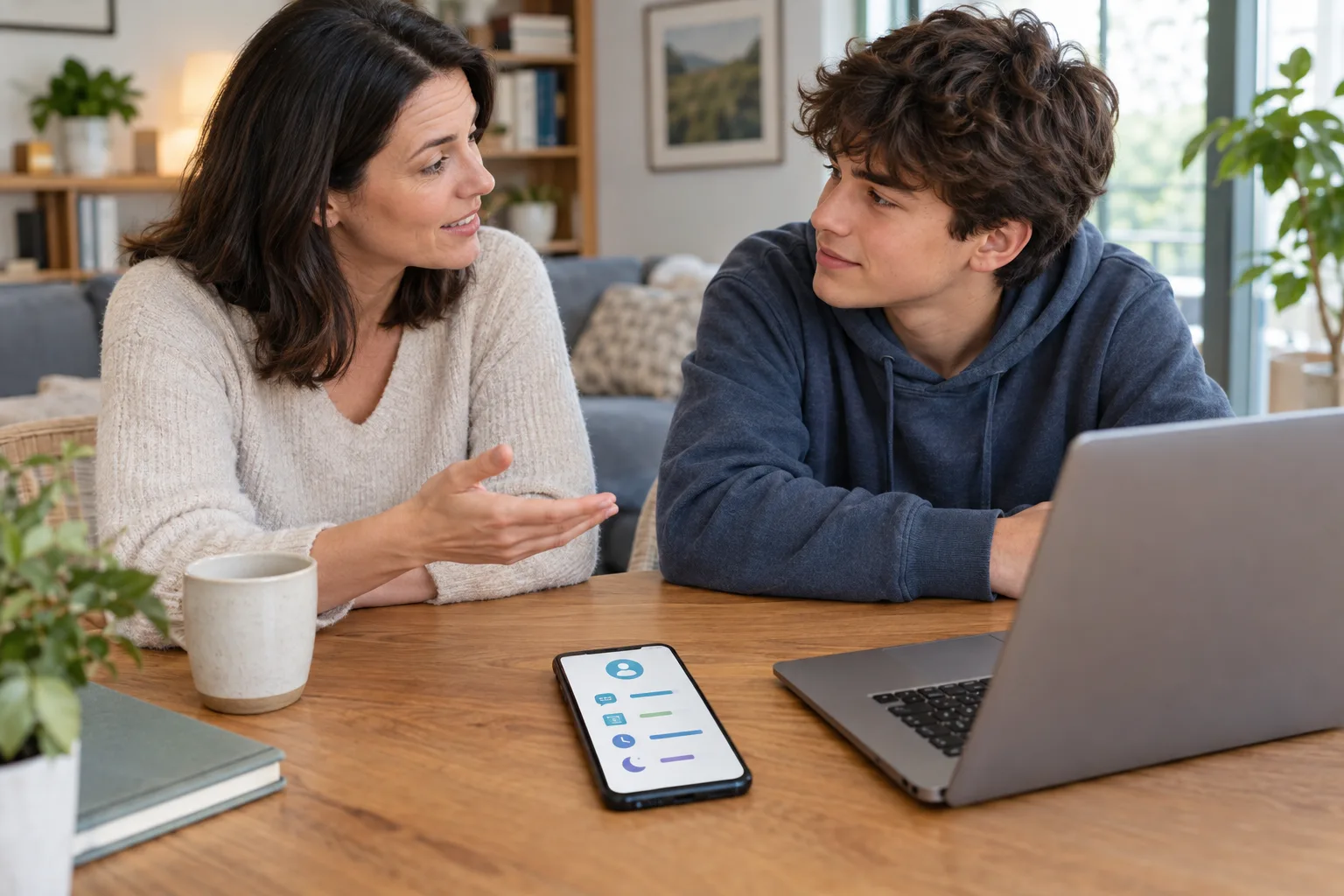
Location sharing, device controls and online-status awareness answer different questions. Seen: WA Family Online Tracker focuses on online-presence reports and notifications. It can support a family conversation, but it does not prove safety, sleep or activity across every platform.
A family’s choice should start with the question they want to answer. An industry spending forecast does not establish that a particular monitoring feature is effective or available in Seen.
Device limits, location sharing and online-status reports can complement different family agreements. Compare their scope and limitations rather than assuming a newer approach must replace a supported device control.
What Location Tools Can Show—and What They Cannot
For years, the gold standard for app family safety was the physical GPS tracker. Parents would use an android phone finder or an iOS equivalent to check a child's location before bed.
Location sharing can indicate where a supported device is, while a visible online status indicates a limited platform signal. Neither proves that a child is asleep, reading messages or safe. Explain these limits before interpreting a report.
Physical location, screen time and online presence answer different questions. Online status does not demonstrate who is using an account or whether the account holder is asleep. Select signals that fit the agreed family need.

Comparing Device Control Apps vs. Behavioral Metadata Trackers
When deciding how to manage digital curfews, parents generally face two distinct methodologies. Let's compare them side by side.
Approach A: Device Control and Application Blocking
This is the traditional method, often involving operating system-level restrictions that shut down the device at a specific hour.
- Pros: Enforces a hard physical boundary. Highly effective for young children (ages 6-10) who only use a single tablet.
- Cons: Easily bypassed by older kids. If a teenager's phone is locked, they simply switch to Telegram Web on a browser, or use modified third-party applications like GB WhatsApp that sometimes evade traditional app timers. Furthermore, strict application blocking creates massive friction and trust issues between parents and teens.
Approach B: Cross-Platform Activity Status Monitoring
This is the methodology utilized by Seen: WA Family Online Tracker, focusing entirely on "last seen" and online status metadata rather than blocking access.
- Pros: Respects the privacy of actual message content while revealing vital behavioral patterns. By analyzing timestamps, parents can identify sleep deprivation or unauthorized late-night messaging without reading private chats. It also functions across multiple networks simultaneously.
- Cons: Requires parents to actively review and interpret the activity graphs to have meaningful conversations with their children, rather than relying on an automated lock.
Modern developers are recognizing this shift. Companies building comprehensive app family safety portfolios are increasingly integrating AI-assisted awareness features because parents want insight, not just a digital padlock.
How Seen's Upgraded Sync Engine Changes the Equation
The most significant improvement in activity monitoring recently is the ability to correlate data across completely different communication networks.
People may use messaging, browsers and gaming services across multiple devices. A report from one supported platform is therefore a partial view, not a complete record of a person’s digital activity.
The current Seen store listing describes online-time reports, notifications, statistics and routine tags. It does not establish the cross-platform merged timeline described here. Check supported platforms and available features in the current product before relying on a comparison.
Comparing visible intervals can raise a question about a routine, but it cannot remove every blind spot or establish why someone was online. Interpret reports with the account holder’s knowledge and avoid treating inference as fact.

Look Beyond the Spy Dialer Illusion
In my consulting experience, parents often misdiagnose the root of their digital safety concerns. When an unrecognizable contact repeatedly messages a child late at night, the immediate reaction is to perform a backwards phone number lookup or use a spy dialer tool to identify the caller.
While discovering who owns a number can be useful context, it is ultimately static information. A one-time lookup does not tell you if that contact is consistently keeping your teenager awake until dawn.
A recurring late-night online interval may be a useful prompt for discussion. It does not identify a contact, reveal a conversation or prove that another person caused the activity.
The Impact of the Financial and Gaming App Boom
Gaming, messaging and financial services create different routines. Industry-wide download or spending estimates cannot establish a teenager’s behavior; focus on the household’s observed experience and agreed boundaries.
The commercial scale of app stores does not explain an individual child’s habits. Discuss actual use, purchases and notifications, and choose appropriate controls for the specific concern.
Switching devices or connections can limit what a report reveals. A phone number or status marker is not a complete record of identity or usage across networks. Document the scope of the selected tool instead of promising universal coverage.
Adopt the Right Strategy for Your Family
Choosing the right approach requires honesty about your household's specific needs.
Who is this approach for? Cross-platform activity tracking is designed for parents of teenagers, families attempting to build trust through digital transparency, and households managing multiple laptops, tablets, and smartphones.
Who is this not for? Online-status reports are not a way to covertly read private messages or bypass a platform’s privacy controls. For app limits, use supported device controls. Any family monitoring should have a clear purpose, explicit awareness and an appropriate consent basis.
A digital curfew should be an agreement the family understands. Choose device controls or limited online-status reports according to that agreement, explain what each signal can show, and revisit the arrangement together.